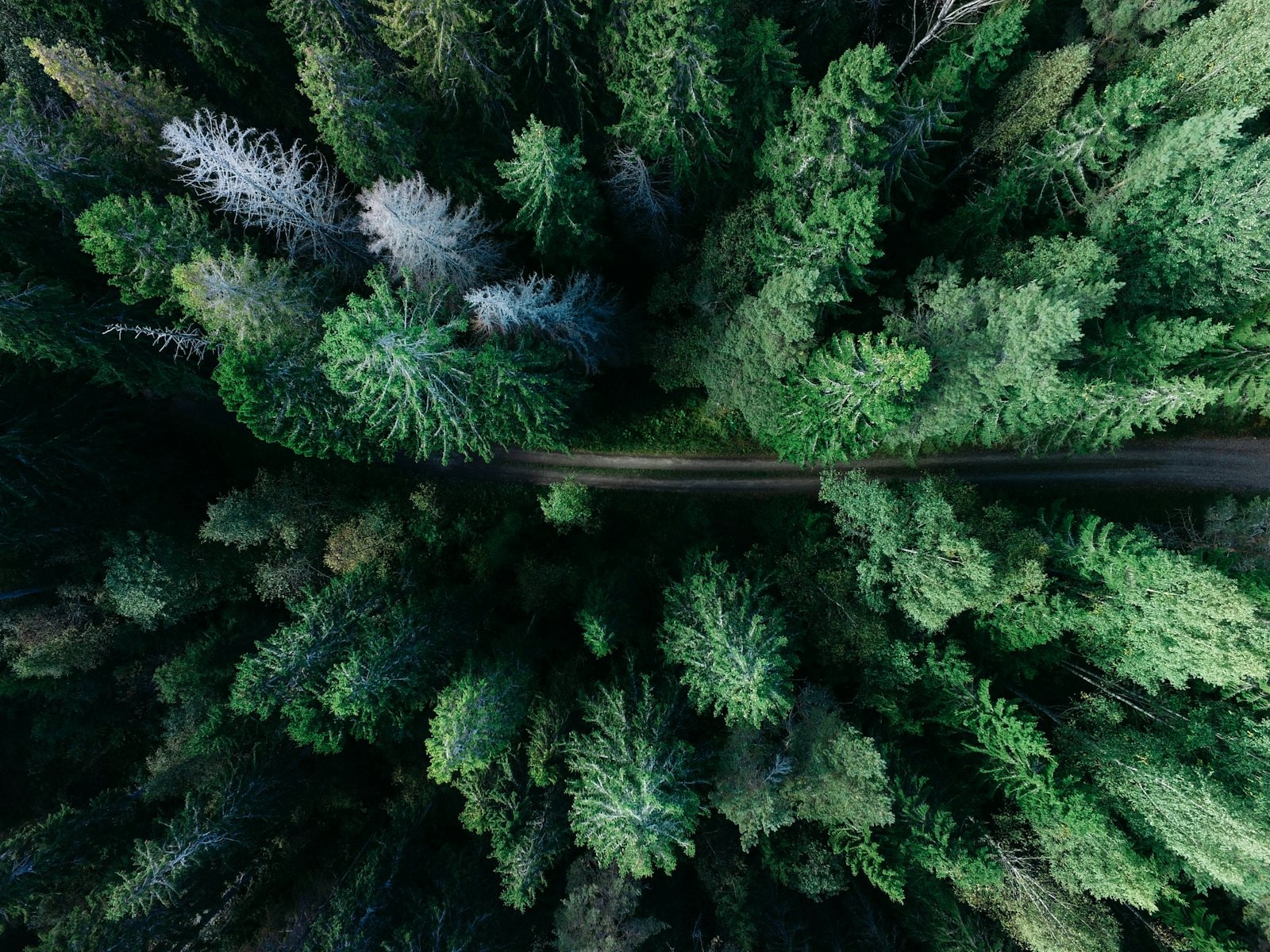
What is a retreat - and how it differs from a stay.
A retreat is a sequence, not an amenity.
In English the word retreat originally means a withdrawal - etymologically a military term. In stay culture, retreat means a deliberate withdrawal from your everyday environment, usually in a natural setting, with a specific intent: reset, reflection, a change of state.
The key difference between a retreat and a regular stay: a retreat has structure. It is not just about the place but about how you spend time - the sequence of actions, the limited inputs, the conscious rhythm of the day. A hotel spa is amenities. A retreat is a frame.
Not every cabin stay is a retreat. Most are not. A retreat begins where intent appears: I want to come out of something, get to something, in a particular way, in a particular setting.
Retreat vs stay vs hotel spa vs workation.
Co realnie decyduje o jakości pobytu.
Privacy
A retreat needs full control over the environment. A shared waterpark, a steam jacuzzi next door, a noisy restaurant - those are inputs that do not pause the retreat, they cancel it.
Quiet
Not monastery silence, but the absence of artificial sound. No music in elevators, no TV in the background, no notifications. Forest at the window instead of a hotel hallway.
Rhythm
A retreat has its own internal time. It does not start and end at fixed hours - you ease into it. First evening: unplugging. Second day: ritual. Departure: a new rhythm.
Materiality
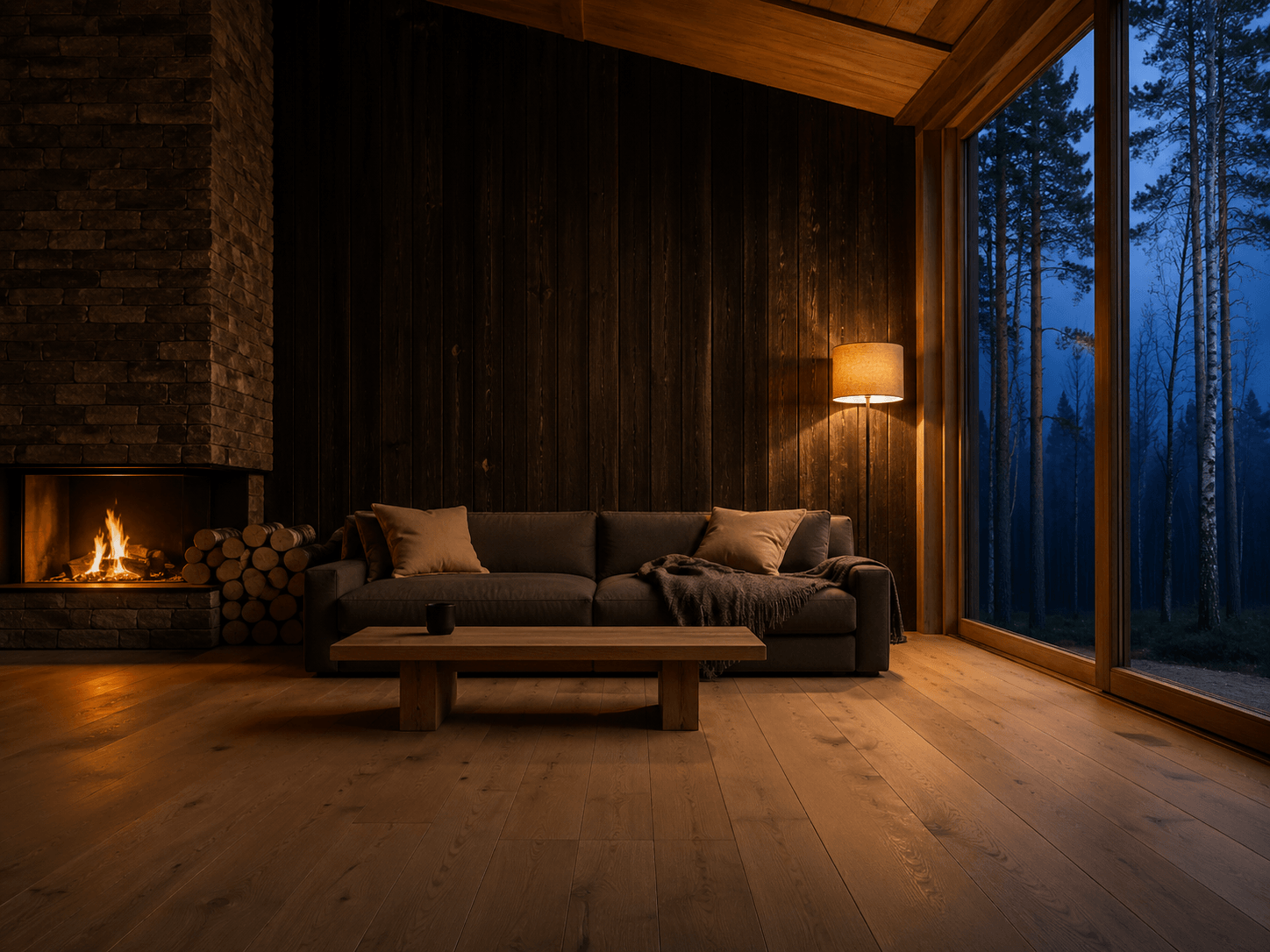
Wood, stone, water, fire. These four elements decide whether your body understands it is somewhere else. Plastic furniture and synthetic linens signal: you are in a hotel.
Absence of entertainment
No pool grill, no DJ in the lobby, no list of 30 attractions. Emptiness is a function, not a lack. Cutting the distraction is part of the therapy.
Scale
A retreat works for 2-4 people. A larger group changes the product - logistics appear, roles, social expectations. That is no longer a retreat, it is a team trip.
What a retreat costs - and why.
A retreat is not the cheapest type of stay, but the difference vs a hotel spa is smaller than you might think. A standard weekend at a hotel spa near Warsaw is 1 200-2 500 PLN per couple per 2 nights. A premium private retreat with a real exclusive spa zone: 1 600-3 600 PLN per couple per 2 nights.
The real difference is not the price - it is the product. A hotel spa gives you a room and access to a pool with 30 other people. A retreat gives you the whole property, your own sauna, your own hot tub, your own quiet. It is a different purchase.
A cheaper retreat (under 600 PLN per night for 2 people) is usually a stay in a sauna-as-add-on cabin, marketed as a retreat. Always check: is the spa zone exclusive, is the plot private, are there neighbours behind the fence.
When a retreat makes sense - and when it does not.
Makes sense: after a long stretch of pressure, on a regular cycle (quarterly, twice a year), before or after a big life decision, during burnout, as a present for someone who does not need things but needs time.
Does not make sense: as a one-time annual escape that replaces a longer holiday (a retreat does not stand in for a week of real disconnection), during an active conflict (a retreat will not fix a relationship), as a treatment for something diagnosable (a retreat is not therapy).
Season: autumn (October-November) and early spring (February-March) work strongest. Summer competes with holidays, deep winter with the holiday season. The cleanest effect comes in the transition months when nature itself is in a quieter state.
Lista, którą warto sprawdzić przed wyjazdem.
Arvo Forest - private retreat 55 min from Warsaw.
A private forest cabin with a Finnish sauna, wood-fired hot tub and fire zone. Full privacy of the spa zone, 2161 m2 forest plot, no neighbours in sight. Retreat as infrastructure, not storytelling.
Pytania, które padają najczęściej.
Is a retreat the same as a religious retreat?⌄
No. Religious retreats (e.g. Christian retreats) are part of a faith tradition - cycles of teaching in a religious context. A retreat in our sense is a broader, secular concept based on physical and mental withdrawal - without a religious dimension, unless that is the explicit theme (e.g. a meditation retreat).
Does a retreat have to be facilitated, with a leader?⌄
No. Retreats can be facilitated (yoga, breathwork, meditation, thermal therapy) or self-led (private retreat). Most premium private retreats in Poland are self-led - the place provides structure, you fill it with content yourself.
Does a solo retreat make sense, or does it have to be a couple?⌄
Both work but produce different effects. Solo gives a stronger reflective and mental reset. As a couple - stronger effect on the relationship. A group of 3-4 people rarely works as a retreat - more often it becomes a team trip.
How many days do you need for a real retreat?⌄
Two nights minimum. The first 24 hours your brain is still in everyday mode - checking email, planning the return, analyzing. Real disconnection only appears on the morning of the second day. Three nights is ideal, seven for a deeper effect.
Can I work during a retreat?⌄
Then it is not a retreat - it is a workation. Geographically they overlap (same property), but the product is different. A retreat assumes no remote work. A workation - the opposite.
Is a sauna and hot tub stay a thermal retreat?⌄
Yes, in the informal sense. The Scandinavian / Finnish sauna - cool down - hot tub - rest sequence is a classic thermal ritual. It produces measurable regenerative effects: lower cortisol, better sleep, raised heat tolerance.
Does a retreat work if I only have one weekend?⌄
Partially. A one-night retreat is closer to a long evening than a retreat. Two nights (Fri-Sun) is the minimum where the effect is felt. Three nights (Fri-Mon or Thu-Sun) is a much better purchase.
What separates a premium retreat from a cheap one?⌄
Three things: privacy (full vs shared), materiality (wood, stone, natural fabrics vs synthetic), attention to detail (lighting, sound, scent vs random mix). Price is not the strongest signal - expensive can also be done badly.
Is a retreat for introverts?⌄
Not necessarily. A retreat naturally limits social contact, so introverts often feel at home. But an extrovert after a long stretch of people-facing work may need a retreat even more - a way to reset the input battery.
Is there a facilitated retreat at Arvo Forest?⌄
No - Arvo Forest is a private self-led retreat format. The property gives you the structure: privacy, the sauna-tub-fire sequence, quiet, materiality. The content (goals, reflection, sessions) you fill yourself. For facilitated retreats with a yoga/breathwork/meditation teacher, look for specialised retreats.
Czytaj dalej
Private forest retreat with sauna and hot tub, 55 min from Warsaw.
Czytaj →Stay packages, what is included, cancellation policy.
Czytaj →Główny obiekt: prywatny leśny retreat z sauną, balią i ogniem, ~55 min od Warszawy.
Czytaj →Pompa ciepła, fotowoltaika, rekuperacja, wallbox EV w cenie. Eco-conscious bez kompromisu jakości.
Czytaj →Hotel SPA vs prywatny retreat dla pary. Pomysł na dwa dni bez tłumu.
Czytaj →Jak odróżnić obiekt z sauną-dodatkiem od prywatnej strefy SPA. Poradnik wyboru.
Czytaj →
Pierwsze terminy dostają osoby z listy.
Zostaw email, a dam Ci znać przed publicznym otwarciem Arvo Forest. Bez spamu - tylko realny sygnał, kiedy rusza rezerwacja i pierwsze pobyty.